

Redevelopment and adaptive reuse of the former Cotonificio di Partanna Mondello in Palermo with Suarez Santas Arquitectos
Second Prize – Design Competition
In collaboration with:
Suarez Santas Arquitectos
Sympraxis srl
ABGroup Engineering
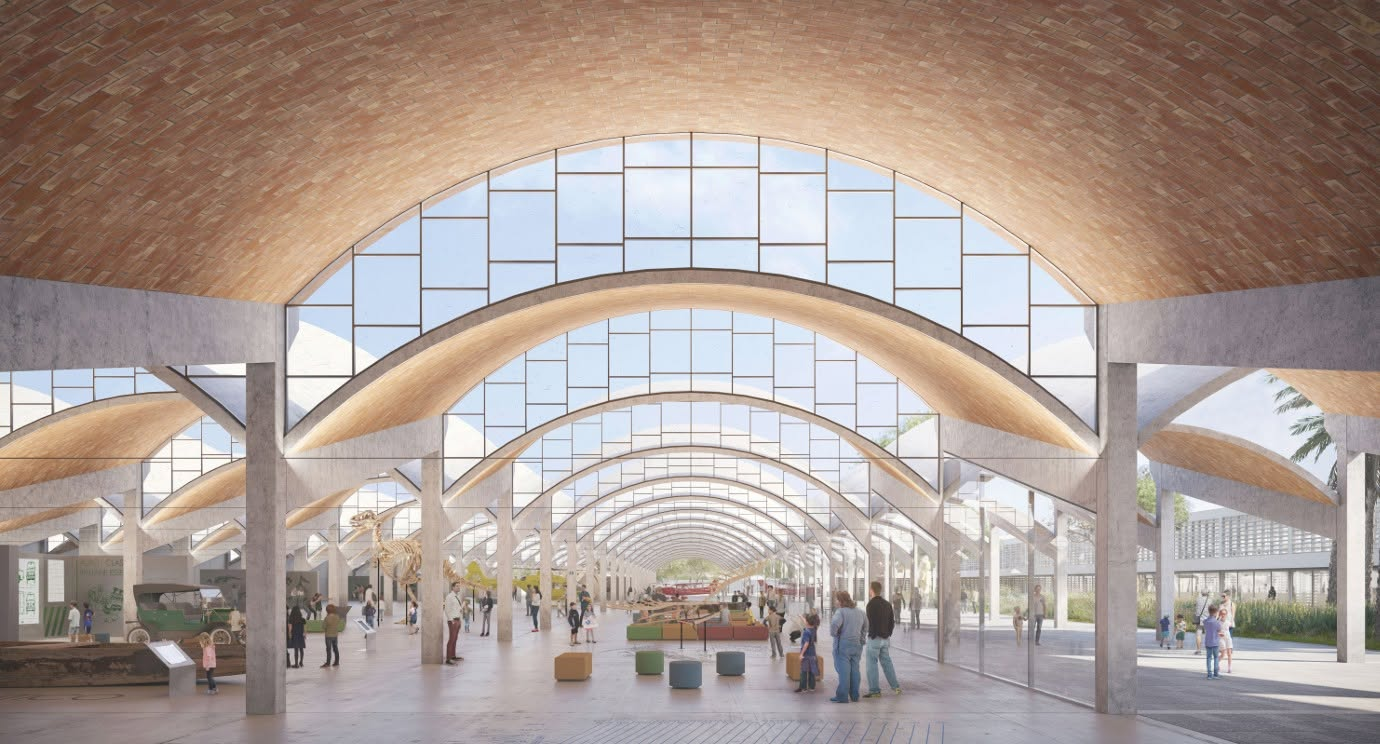
The project proposes the transformation of the former Cotton Mill (Cotonificio) into a new Museum of Science and Technology for Children: a place where the building’s industrial heritage is reimagined as a space for knowledge, education, and scientific discovery.
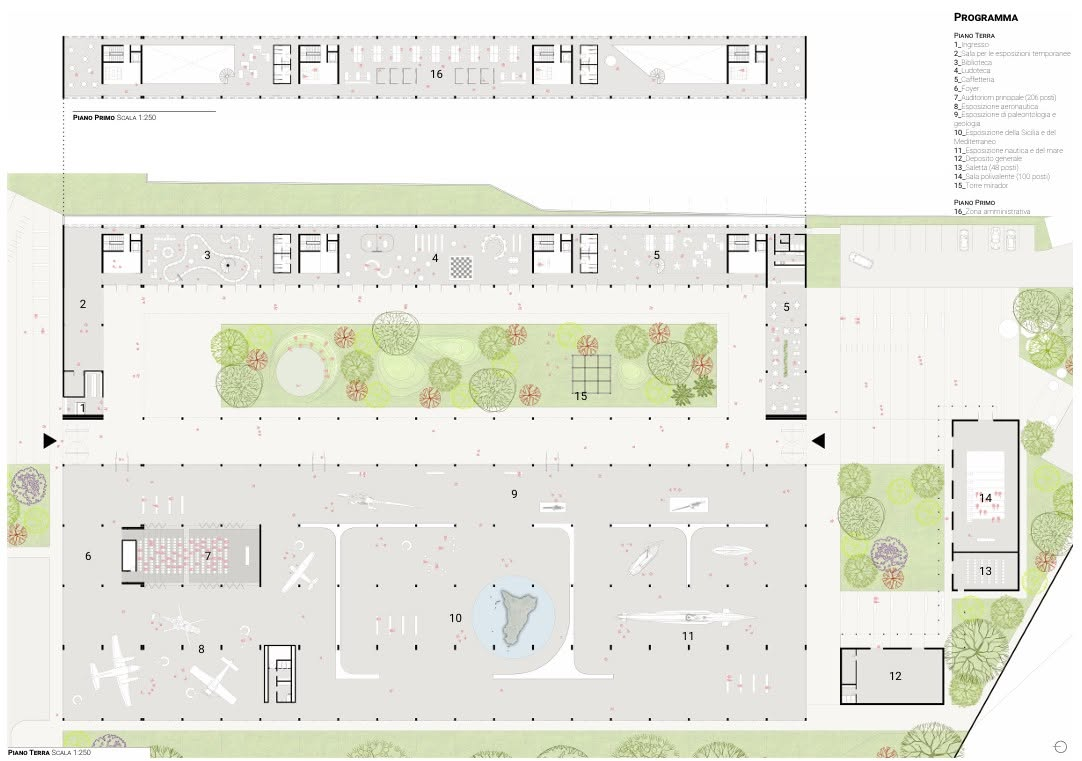
Regarded as a true monument of modernity, the former Cotton Mill is reinterpreted with full respect for its Functionalist identity. Rather than a purely conservative restoration, the project envisions an architectural metamorphosis capable of breathing new life into the existing structure. The selective demolition of a deteriorated section of the building allows for the creation of a large, tree-lined courtyard—an hortus conclusus open to the city—which becomes both an outdoor extension of the museum and a public gathering space.
The new complex will accommodate flexible exhibition areas, conference halls, a library, children's play and learning spaces, a café, coworking facilities, and educational workshops, establishing itself as a cultural hub for children, young people, families, and schools. Set within an urban context currently lacking facilities for children and largely dominated by commercial activities, the museum aims to become a new social and cultural catalyst.
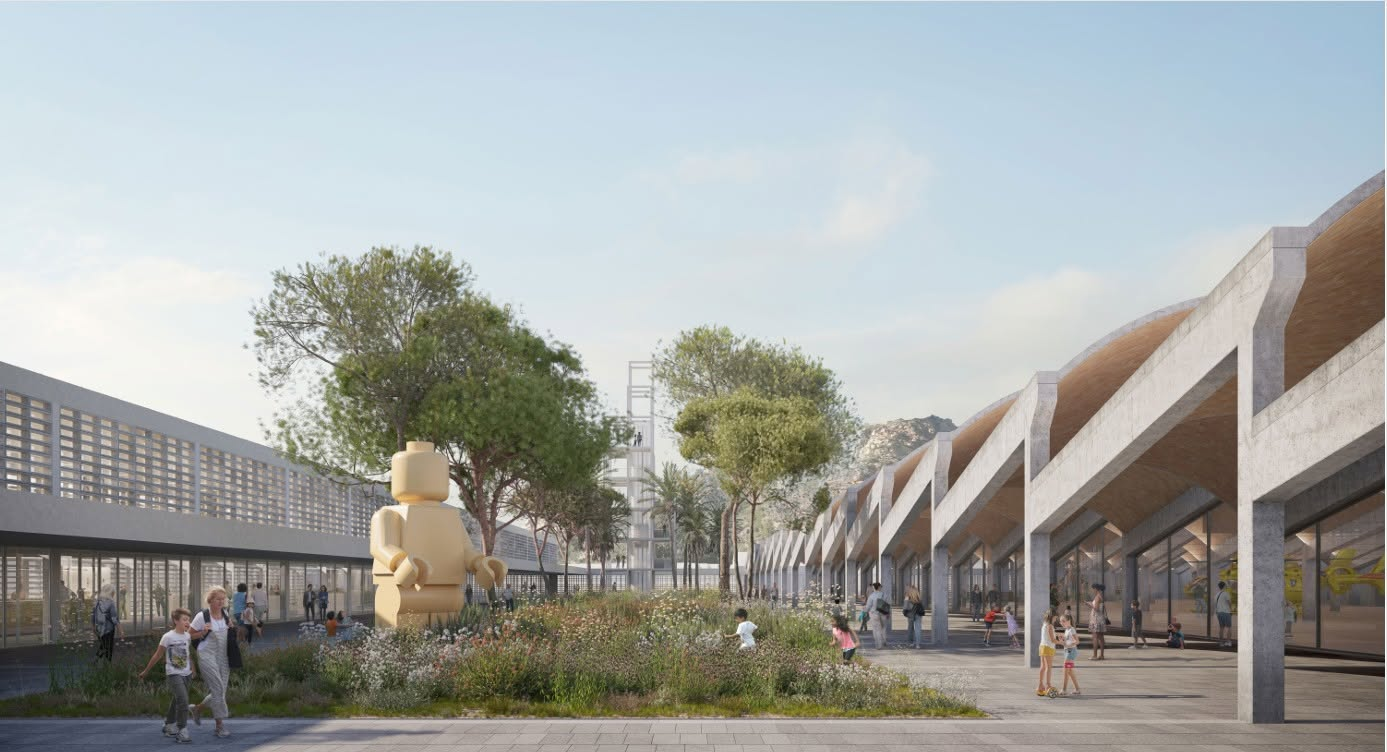
The project also establishes a strong relationship with the landscape of Monte Gallo through an extensive Mediterranean garden, a panoramic lookout tower (mirador), and green spaces conceived as an educational extension of the nature reserve. The architectural language and material palette are deliberately restrained: concrete, plaster, and Billiemi stone engage in a dialogue with the site's industrial memory and Palermo's architectural tradition.
Environmental sustainability lies at the heart of the proposal. Photovoltaic panels, rainwater harvesting systems, radiant heating and cooling, native vegetation, and bioclimatic strategies contribute to transforming a former site of industrial production into a new place dedicated to the creation and dissemination of knowledge.